


What You Should Know About Post-Mastectomy Sensation Loss
Breast cancer surgery has come a long way but experts and patients are now looking at addressing sensation loss as the next frontier.
Breast cancer surgery has come a long way but experts and patients are now looking at addressing sensation loss as the next frontier.

Under certain circumstances, people with breast cancer may have the opportunity to choose between total removal of a breast (mastectomy) and breast-conserving surgery (lumpectomy) followed by radiation.

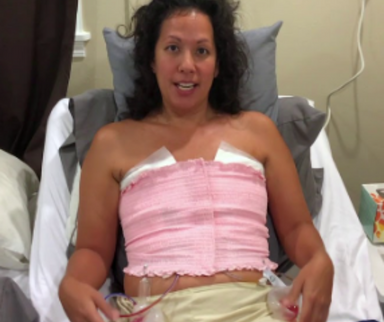
Blog article about how to prepared for your mastectomy, hospital stay and recovery.

A lumpectomy is the most common type of surgery used in breast cancer treatment. At MD Anderson, our breast cancer surgeons perform around 900 lumpectomies each year.

Axillary web syndrome (AWS), also known as cording, sometimes develops as a side effect of sentinel lymph node biopsy (SLNB) or axillary lymph node dissection (ALND).

As a former nurse in MD Anderson’s Post-Anesthesia Care Unit (PACU), I felt pretty familiar with breast cancer surgery. So, I thought I knew what to expect when I scheduled my own mastectomy last August.

All people (regardless of their sex assigned at birth) have breast tissue and could potentially get breast cancer, but the risk is much higher in people who were AFAB (assigned female at birth).

Talking often with the health care team is important to make informed decisions about your health care. These suggested questions are a starting point to help you learn more about your cancer care and treatment. You are also encouraged to ask additional questions that are important to you.
Blog article for breast cancer survivors about deciding whether to have breast reconstruction or not.

Blog article for breast cancer survivors on body image and sexual health.